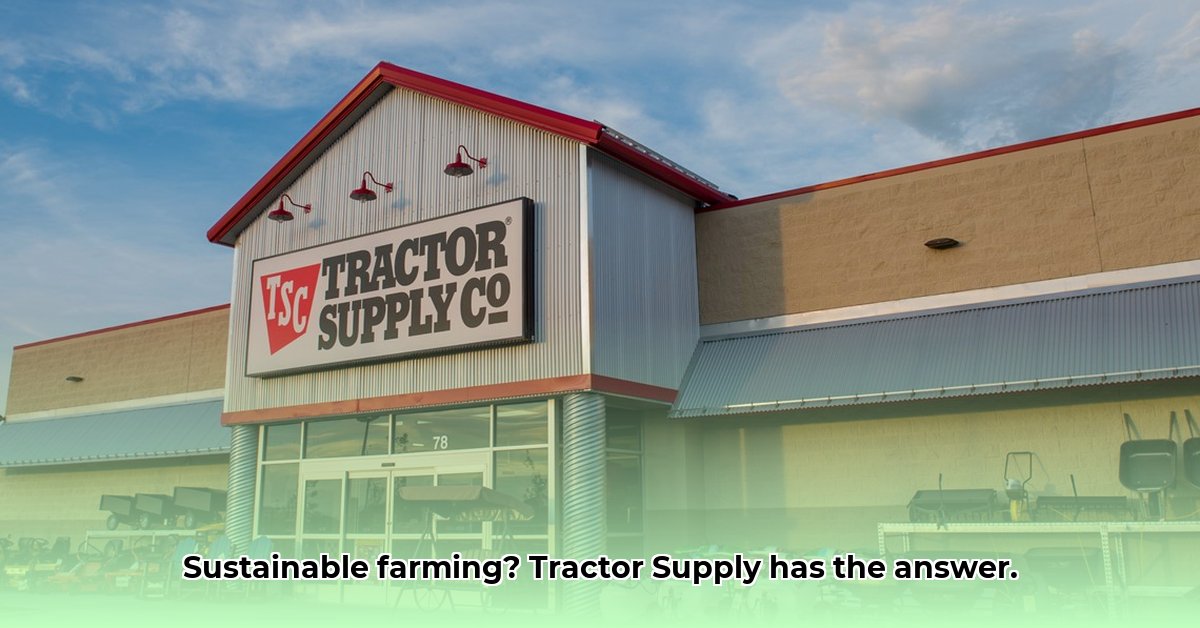
Tractor Supply in Byron, Georgia, serves as a vital resource for local farmers and gardeners, offering a wide array of products from animal feed to fencing. This convenience is undeniably beneficial, particularly for smaller operations. However, the extent of its contribution to sustainable agriculture requires closer examination. How effectively does Tractor Supply support environmentally conscious practices, and what steps can be taken to enhance its role? For similar stores in other locations, check out this Summerville Tractor Supply.
Assessing Tractor Supply's Impact on Sustainable Farming
Tractor Supply offers various products that can support sustainable farming, including organic seeds and water-saving irrigation systems. But determining the overall impact requires a more nuanced analysis. What percentage of their sales are genuinely sustainable products? This crucial data is currently unavailable, hindering a comprehensive evaluation. We need a clearer picture of their sales breakdown to accurately gauge their contribution. How can we measure the true environmental impact of their product offerings in the context of Byron, GA?
Transparency and the Supply Chain
One significant obstacle in evaluating Tractor Supply's sustainability is the lack of transparency in their supply chain. The origin of their products, particularly the sourcing of ingredients for animal feed and the presence of relevant certifications, remains unclear. Without this information, a thorough assessment of their environmental and social footprint is challenging. This lack of detailed information leads to uncertainty regarding the overall sustainability of their product offerings. What steps are needed to increase traceability and transparency within their supply chain?
Collaborative Steps for a Greener Future
To significantly enhance Tractor Supply's positive environmental impact, a collaborative effort involving multiple stakeholders is essential.
For Tractor Supply (Byron Store and Corporate):
Enhanced Product Labeling: Implement clear and prominent labeling for sustainable and ethically sourced products. Ambiguous labeling hinders consumer choices and needs to be rectified for greater transparency. This will enable customers to easily identify and choose sustainable options.
Data-Driven Sales Tracking: Implement a system to meticulously track sales of sustainable products. This data will provide valuable insights into consumer preferences and guide future purchasing decisions. How will Tractor Supply leverage this data to inform their product selection?
Supply Chain Transparency: Increase transparency by openly sharing information about product origins and certifications, fostering trust among consumers. This will reinforce their commitment to sustainable practices.
Employee Sustainability Training: Provide comprehensive training to employees, empowering them to be knowledgeable advisors for customers on sustainable farming practices.
For Local Farmers and Gardeners:
Educational Resources: Utilize resources such as the USDA or the local agricultural extension office to learn about best sustainable farming practices. The USDA provides extensive information on sustainable practices.
Engaging Store Staff: Actively seek advice on sustainable practices from Tractor Supply staff, capitalizing on their local expertise. Staff knowledge and training are crucial for effective guidance.
Feedback and Advocacy: Communicate your needs and preferences to Tractor Supply regarding sustainable product selections. This direct feedback will shape their purchasing decisions.
For Researchers:
Local Impact Studies: Conduct research to quantify Tractor Supply's impact on sustainable agriculture within the Byron, GA, area. This data-driven analysis will provide valuable insights.
Scalability Research: Investigate the potential scalability of Tractor Supply's sustainability approach to a wider context, assessing the feasibility of broader industry adoption. What are the limitations and potential pathways for wider implementation?
Sustainable Choices at Tractor Supply: A Practical Guide
Choosing sustainable supplies from Tractor Supply requires careful consideration. Not all products are equal in terms of their environmental impact. Consider these steps:
Define Your Farming Goals: Identify your specific priorities concerning soil health, water conservation, or carbon footprint reduction.
Pre-purchase Product Research: Utilize online resources to research products, looking for relevant certifications (organic, USDA-approved, etc.).
Meticulous Label Examination: Carefully examine product labels in-store for details on ingredients, processes, and environmental impact. Don’t hesitate to question store staff.
Explore Sustainable Alternatives: If ideal sustainable options are unavailable, consider greener alternatives or consult with local experts.
Support Local and Sustainable Suppliers: Prioritize products from regional vendors committed to sustainable practices.
Reduce Waste: Minimize waste by purchasing only what's needed and properly disposing of packaging.
Ultimately, Tractor Supply’s contribution to sustainable agriculture hinges on its commitment to transparency, data-driven decision-making, and collaboration with local farmers and researchers. By taking concrete steps to improve its labeling, supply chain, and employee education, Tractor Supply can significantly enhance its positive environmental impact and become a leader in sustainable agricultural solutions.